After the Fragment
Spatial installation research
Two installation studies ask how a few sensory cues can give rise to a scene. One unfolds as you move. The other takes shape as you stay.
Overview
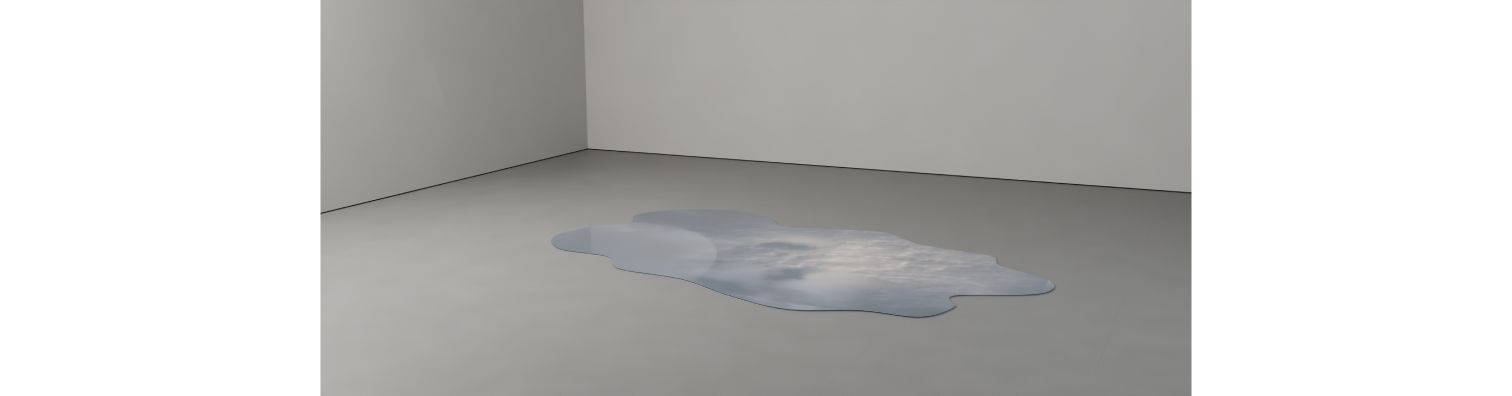
After the Fragment brings together two installation studies. In A Sky Not Above, a thin surface at floor level holds an image of the sky. Moving around it changes where you can look from and what you may be able to see. In Beneath It, a suspended membrane gives you a place to stop. Dents, shadows and sounds arrive over time, suggesting activity above the surface.
Origin
This project began with a question about smell and memory. A passing scent can bring back the place, the season and the feel of a moment I hadn’t meant to remember. I began to wonder what a cue that small could do in a room I was standing in now.
Inquiry
How much information does it take for a scene to start taking shape?
Exploration
Rain gave me a way to work with cues one at a time. A patch of reflected light on the ground, the shelter of a roof and a sound from above can each suggest something about the surroundings. An early study with an umbrella on a clear day led me to look at how a single familiar gesture could change the way a place is read. In these two works, I spread the cues across space and time and leave room for what each person makes of them.
I · A Sky Not Above
A low optical surface places a sky image underfoot. The study asks how much of the image comes into view as you change position.
Concept and experience
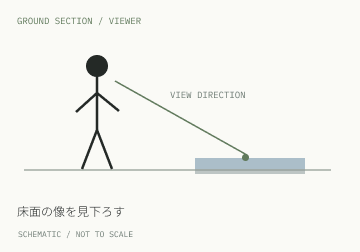
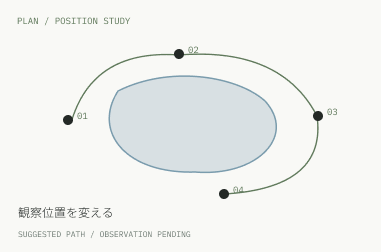
A puddle can bring a patch of sky down to where we walk. I began with that shift in the direction of a gaze. In the installation proposal, a thin surface sits close to the floor. You can approach it, look down and try another position. As the view changes, you might also reconsider what kind of surface you are looking at, or what could have left an image there.
Process
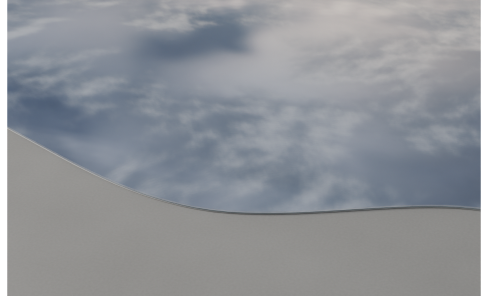
I made a small material sample while exploring a combination of privacy film, a flat light source and a sky transparency. I used digital studies to compare the ground-level outline, the edge and several viewing positions. The installation is still in development. I’m looking at how much of the image the material can reveal from different positions.
II · Beneath It
A suspended membrane gives shape to movements overhead. As you stay beneath it, brief dents and sounds give way to a deeper sag.
Origin and concept
Standing beneath a rain shelter, I noticed how small dents appeared and disappeared above me. The surface gave me a way to sense what was happening on the other side. For Beneath It, I propose a translucent rectangular membrane suspended from its four corners. From below, hints of the activity above reach you through shifts in the surface, faint shadows and rolling and tapping sounds.
Experience
The proposed sequence begins with a quiet surface. As the light fades, small dents appear, followed by a more sustained movement. Some of the spheres gather and the membrane slowly sags. The movement and sound subside, and the shape remains. Each change gives you another chance to reconsider what you thought was happening overhead.
Five Acts
- Stillness
The membrane hangs quietly as the room dims.
- First signs
Small dents appear and disappear.
- Rhythm
Motion spreads across the surface.
- Accumulation
Weight gathers and the membrane slowly sags.
- Trace
Motion and sound subside. The shape remains.
Process
The project is being developed through CG previsualization. The storyboard works from the initially still surface to the form left at the end. A separate mechanism study looks at how the motion and gathering of the spheres could produce those changes.
Continuing the Study
I want to pay attention to the moments when a scene begins to form, shifts into something else, or remains unclear. The next studies will look more closely at what becomes visible when someone moves and what they notice if they choose to stay.